How Long Does Solar Take to Pay Back in Himachal Pradesh? (Real Data & Example)
In March, I visited Kasauli and spent a few days soaking in its calm, sunlit landscapes. What stood out wasn’t just the serenity, but the quality of sunlight—clear, consistent, and paired with a pleasantly cool climate. It felt like an ideal setting for solar energy.

That experience led me to explore the broader solar potential of Himachal Pradesh. Despite its mountainous terrain, the state receives abundant sunshine for most of the year. With supportive government subsidies and increasing energy needs in remote areas, solar power presents a practical alternative to conventional grid electricity.
In regions where extending grid infrastructure is expensive or difficult, rooftop solar offers a solution that is not only accessible but also cost-effective over time. This raises an important question—how viable is solar in Himachal, and how long does it take to pay back?
Solar Potential in Himachal Pradesh
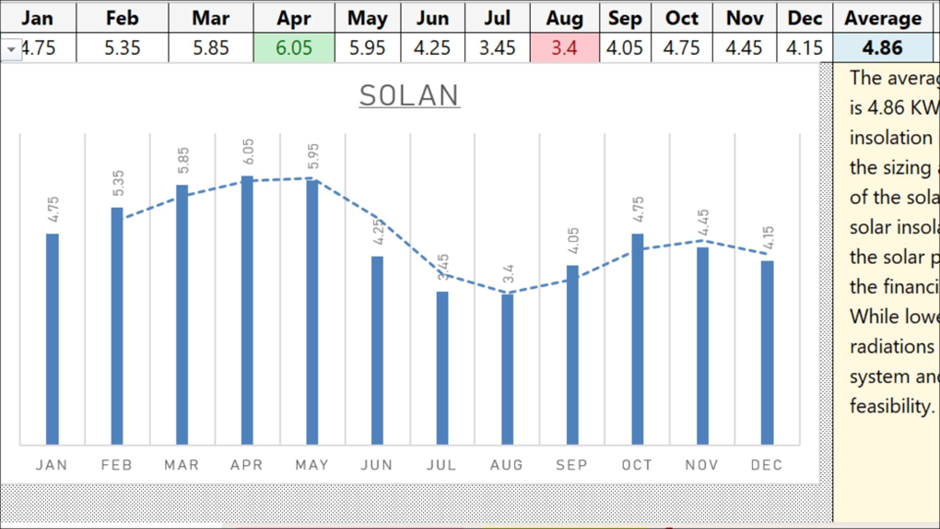
Himachal Pradesh receives an average solar radiation of 4.5–5.3 kWh/m²/day and enjoys nearly 300 sunny days each year, making it a strong candidate for rooftop solar adoption. What makes the state particularly interesting is not just the availability of sunlight, but the quality of operating conditions for solar panels.
A typical 1 kW solar system in Himachal can generate around 3.5–3.8 units per day, translating to roughly 1,250–1,350 units annually after accounting for system losses. This performance is supported by the region’s cooler climate, which plays a crucial role in improving panel efficiency. Solar panels tend to lose efficiency at higher temperatures, so cooler environments help maintain better output.
Why Temperature Makes a Difference
Consider a comparison between Kangra and Pathankot—two locations at similar latitudes but with noticeably different climates. Pathankot typically experiences summer highs of 37–39°C, while Kangra remains cooler at around 30–33°C due to its higher altitude.
This difference matters. Even if both regions receive similar sunlight, solar panels in Kangra operate more efficiently because lower temperatures reduce thermal losses. In simple terms, the same sunlight can produce more electricity in cooler conditions.
Himachal, therefore, presents a unique case:
- Cooler climate → higher panel efficiency
- Low pollution → clearer sunlight and better performance
- Sloped roofs → naturally optimized tilt, though installation can be more complex
- Higher-altitude areas → occasional snowfall causing temporary generation dips
These factors combine to make Himachal both challenging and highly rewarding for solar adoption.
Solar Payback in Himachal Pradesh
What is Solar Payback?
Solar payback is the time required to recover your initial investment in a solar system through savings on electricity bills. In simple terms, it tells you how many years it takes for your system to “pay for itself.”
The basic formula is: Payback (years) = (Initial cost – subsidy) ÷ annual savings
Real Example: 3kW System in Kangra
A practical example makes this clearer. Last year, a homeowner in Kangra installed a 3kW rooftop solar system at a net cost of around ₹1,30,000 after receiving a central government subsidy of ₹78,000.
Given Kangra’s latitude (~32°), the system was installed with a slightly higher tilt of about 35°. This design choice helps in multiple ways—snow is less likely to accumulate on panels, rain naturally cleans off dust and pine debris, and winter performance improves as panels capture more sunlight when the sun sits lower in the sky.
Over the past 10 months, the system has generated approximately 3,500 units, resulting in savings of about ₹20,000. Based on this trend, the estimated annual savings come to roughly ₹24,000.
Payback & Long-Term Gains
Using these figures:
Payback = ₹1,30,000 ÷ ₹24,000 ≈ 5.5 years
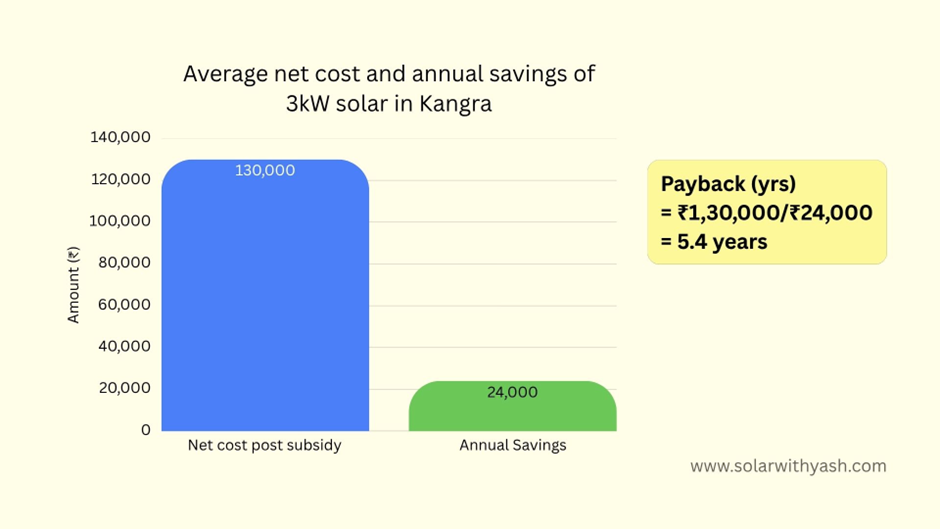
This means that within about five and a half years, the system recovers its cost. Beyond that, the electricity generated is essentially free, aside from minimal maintenance.
Over a typical lifespan of 25 years, total savings can exceed ₹6,00,000—nearly five times the initial investment.
For homeowners in Himachal, this makes solar not just an environmental choice, but a financially sound and reliable long-term investment, offering stability against rising electricity costs and greater energy independence.
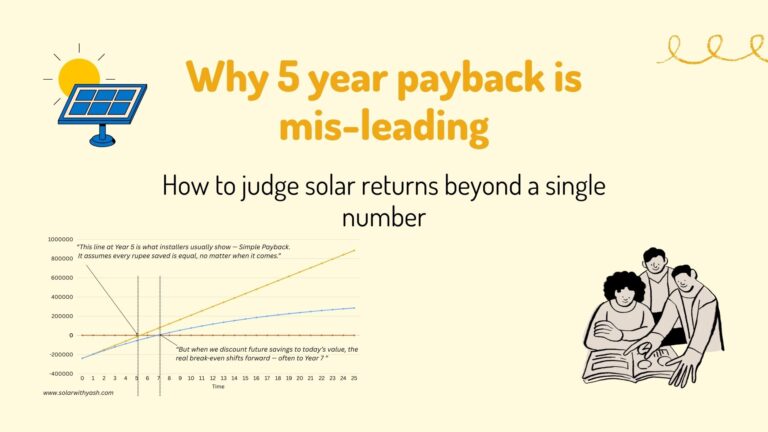
First-year solar savings often look impressive, but they rarely tell the full financial story. Read this in my detailed post, “Why First-Year Savings Don’t Predict Lifetime ROI
Key Factors Affecting Solar Payback in Himachal Pradesh
Solar payback in Himachal Pradesh is not uniform—it varies significantly based on location, roof structure, and policy benefits.
(i) Location within the State
Areas in the foothills of the Himalayas, such as Solan and Kangra, typically experience faster payback periods. These regions receive good sunlight with minimal or no snowfall, ensuring consistent solar generation throughout the year.
In contrast, higher-altitude regions like Shimla, Dharamshala, Kullu, and Kinnaur experience snowfall and more variable weather.
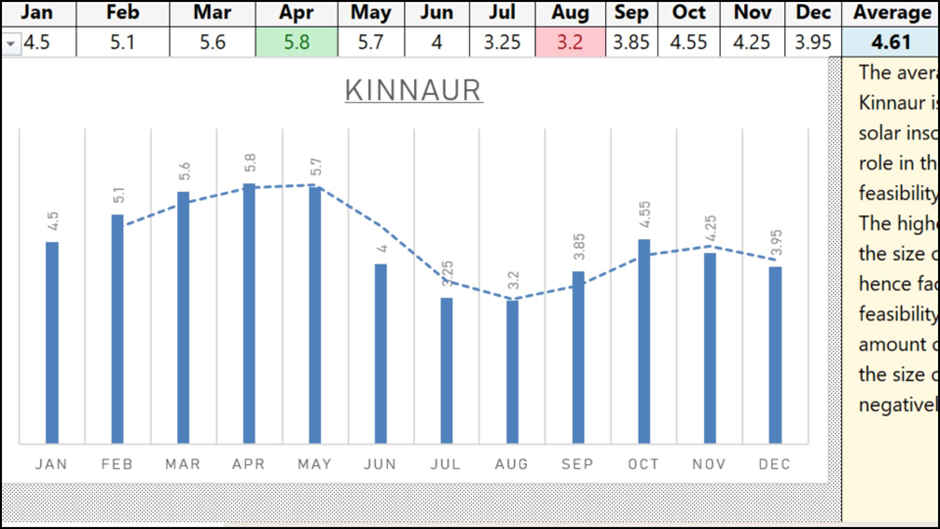
Snow accumulation and cloud cover can temporarily reduce solar output, slightly extending the payback period.
(ii) Roof Type and Installation
Himachal homes commonly feature sloped roofs.
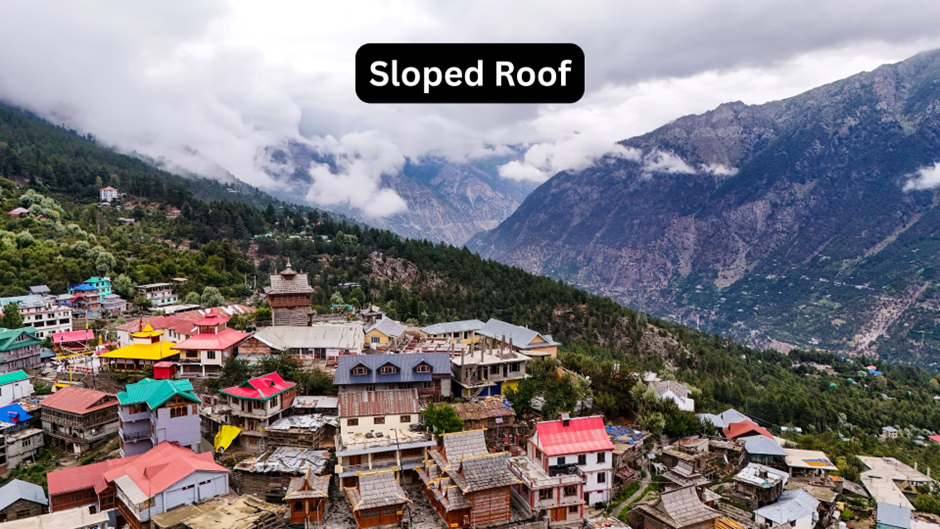
While these can increase installation complexity and cost, they also offer a natural advantage—better tilt for solar panels, leading to improved efficiency and higher energy generation over time.
(iii) Net-Metering Benefits
Under policies by the Himachal Pradesh State Electricity Board, homeowners can export excess solar power to the grid. This reduces electricity bills and accelerates payback.
(iv) Electricity Tariff Impacts
For a household consuming around 350 units/month, the tariff is roughly ₹5.5 per unit, resulting in a bill of about ₹2,000. A properly sized solar system can offset this entirely, delivering annual savings of ~₹24,000, which directly shortens the payback period.
Overall, these factors together determine how quickly solar becomes a profitable investment in Himachal.
Challenges of Solar in Himachal Pradesh
Solar in Himachal is promising, but it comes with a few practical challenges that homeowners should understand.
Snow Accumulation
In higher-altitude districts like Kullu and Dharamshala, snowfall can temporarily cover solar panels and reduce generation. However, this can be managed effectively by installing panels at a slightly higher tilt (around 35–40°), allowing snow to slide off easily. Interestingly, this higher tilt also improves winter performance, when sunlight is lower and electricity demand is often higher.
Accessibility and Logistics
Due to hilly terrain, transportation and installation costs are generally higher compared to cities like Gurgaon, Lucknow, or Bhopal. Reaching remote locations adds to both time and cost.
Maintenance in Remote Areas
While companies offer AMC (Annual Maintenance Contracts), servicing in remote areas may take longer. Homeowners should have basic awareness—like occasional cleaning and visual checks—to ensure optimal performance.
A Hidden Advantage
Despite these challenges, Himachal’s cooler climate works in favor of solar panels. Lower temperatures reduce efficiency losses, meaning panels here often perform better than in hotter regions with similar sunlight.
Pro Tips for Homeowners
- South-facing roofs give the best output
- In higher regions, use a tilt of 35–38° for better snow handling
- Clean panels after snowfall to maintain generation
Overall, with the right design and awareness, these challenges are manageable—and the benefits clearly outweigh them.
You might be interested in knowing the Solar Payback of other states in the country. Here is the list for you:
Conclusion
Solar in Himachal Pradesh is not just an environmentally responsible choice—it is a financially sound investment. With abundant sunshine, supportive policies, and improving awareness, most households can recover their investment in under 7 years.
Payback tends to be faster in foothill regions like Solan and Kangra due to minimal snowfall and consistent generation, while it may be slightly longer in higher-altitude areas because of weather-related interruptions. With proper system design, optimal tilt, and basic maintenance, solar power in Himachal offers decades of reliable, low-cost electricity, making it a practical step toward energy independence and long-term savings.
Know the exact sizing of your solar power system and find its financial feasibility before investing in Solar. Get my advanced financial tool, SFS- India Edition, now!
FAQ (Quick Answers)
1. What is the average PSH in Himachal?
Around 4.5–5.3 kWh/m²/day
2. What is the average solar payback period in Himachal Pradesh?
Typically, under 7 years
3. Is a subsidy available in Himachal?
Yes, under PM Surya Ghar Yojana
- Up to ₹30,000 per kW (1–2 kW systems)
- Up to ₹78,000 for 3 kW systems
4. What is the right solar system size?
Depends on your current consumption and future needs
5. What is the ideal tilt for solar in Himachal?
- Typically, 30°–35° (close to latitude)
- In snow-prone or higher-altitude areas, 35°–40° is recommended for better winter performance and snow shedding
6. Tips for homeowners?
- Slightly higher tilt in snow-prone areas
- Regular cleaning & basic maintenance
- Choose a high-quality solar system for long-term performance